
This Healthy Poke Bowl is a fresh, protein-packed meal loaded with salmon or tuna, quinoa, avocado, edamame, cucumber, and a savory sesame-soy dressing. Colorful, customizable, and ready in just 20 minutes!
Total Cooking Time: 20 minutes
Difficulty Level: Easy
Yield: 4 servings
Estimated Calories: Approximately 450–520 calories per serving
A Healthy Poke Bowl is one of those meals that manages to look spectacular while remaining surprisingly simple to prepare. Picture a colorful bowl layered with fluffy quinoa, buttery avocado, crisp cucumber, purple cabbage, bright green edamame, and tender cubes of fish, all finished with a glossy sesame-soy dressing. Every ingredient brings something different to the bowl, creating an irresistible combination of creamy, crunchy, savory, tangy, and fresh flavors.
The aroma is equally inviting. Toasted sesame oil provides a warm nuttiness, fresh lime adds a lively citrus note, and pickled ginger contributes a sweet, sharp finish. Against those bold flavors, avocado tastes especially creamy and the vegetables remain refreshing and crisp. A sprinkle of sesame seeds over the top adds the final touch and makes these bowls particularly beautiful for serving or photographing.
Best of all, this easy healthy poke bowl recipe can be ready in about 20 minutes when your quinoa is already cooked. Serve it for a refreshing lunch, a light summer dinner, meal prep, or a build-your-own bowl night with friends and family. With protein, vegetables, healthy fats, and a satisfying grain base in one colorful bowl, it is a meal you’ll want to make again and again.
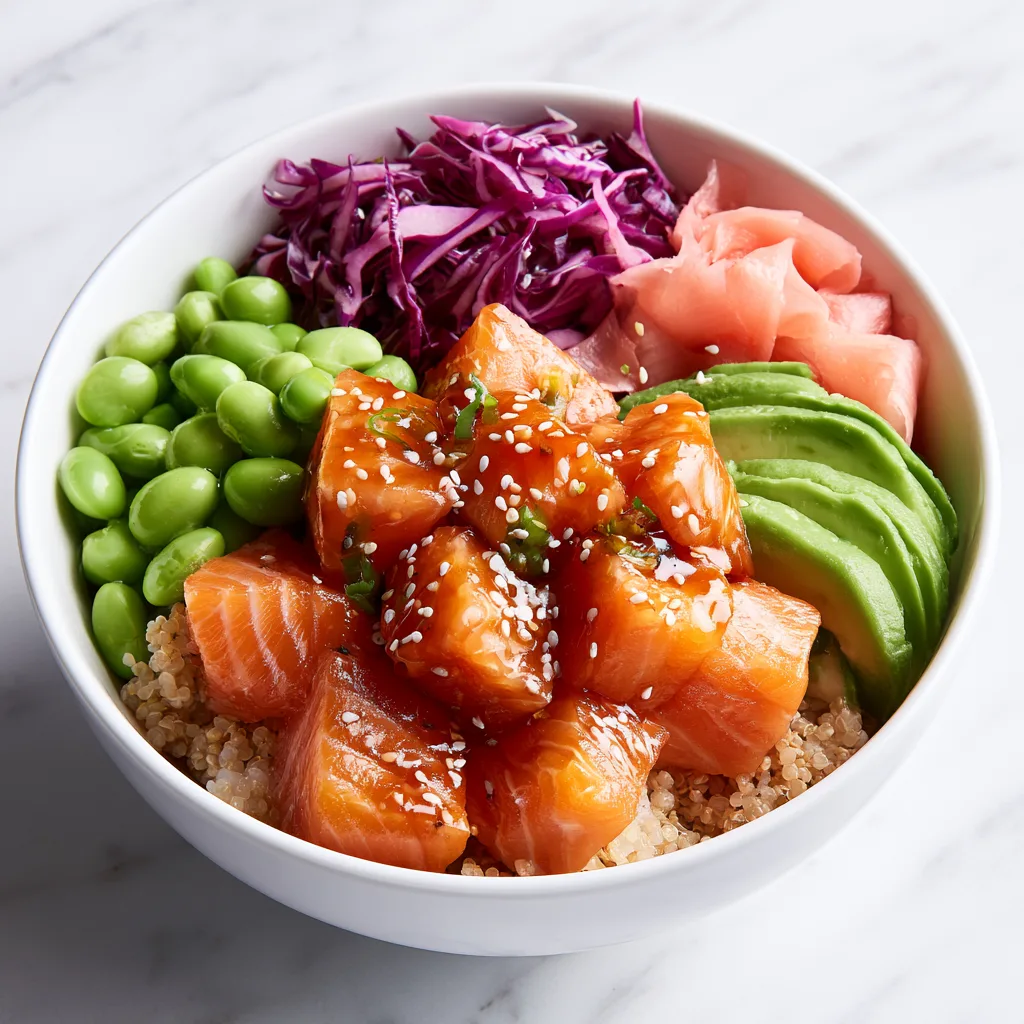
Why This Healthy Poke Bowl Recipe Is Special
The beauty of a homemade Healthy Poke Bowl is that you control virtually every component. Instead of relying on a fixed restaurant combination, you can adjust the grain, protein, vegetables, dressing, and toppings according to your preferences. Love avocado? Add another spoonful. Prefer extra crunch? Double the cucumber and cabbage. Want more heat? Finish everything with sriracha. The basic formula remains simple while the possibilities feel almost endless.
This recipe also provides a satisfying contrast of textures. Quinoa creates a light, fluffy foundation with a pleasantly nutty character. Avocado is rich and creamy, cucumber is cool and crunchy, cabbage adds crispness, and edamame provides a tender bite. Sesame seeds bring delicate crunch to the finish, while pickled ginger cuts through richer ingredients with its sharp, refreshing flavor.
For a raw-fish version, use fish specifically intended for raw consumption from a trusted source and keep it properly chilled. If raw seafood isn’t for you, the bowl is equally delicious with thoroughly cooked salmon, shrimp, chicken, tofu, or tempeh. The flexibility makes it easy to prepare different variations for people sitting around the same table.
A typical serving contains approximately 450–520 calories, although the exact amount depends on your protein, quantity of avocado, quinoa, dressing, and toppings. The combination makes this colorful bowl satisfying enough for lunch or dinner without requiring complicated preparation.
Key Ingredients for a Healthy Poke Bowl
Fresh ingredients are the secret to a delicious homemade poke bowl. Each component contributes color, texture, flavor, or richness, so even simple ingredients become exciting when arranged together.
- Tuna or salmon – 1 pound: The main protein and centerpiece of the bowl. For raw preparations, purchase fish intended for raw consumption from a reputable supplier and follow appropriate storage guidance. Alternatively, use thoroughly cooked fish.
- Cooked quinoa – 2 cups: Quinoa creates a fluffy, slightly nutty base and is a flavorful alternative to traditional white rice.
- Avocados – 2 ripe, diced: Creamy avocado balances the salty soy dressing and gives each bite a rich, buttery texture.
- Cucumber – 1 large, julienned or diced: Cucumber adds freshness, hydration, and an irresistible crunch.
- Red cabbage – 1 cup, finely shredded: Its vivid purple color makes the bowl visually striking while providing a crisp texture.
- Shelled edamame – 1 cup, cooked: Edamame contributes extra plant protein, a gentle sweetness, and gorgeous green color.
- Pickled ginger – 2 tablespoons: Sweet, tangy ginger refreshes the palate between richer bites.
- Green onions – 3, thinly sliced: Green onions provide a mild onion flavor and fresh finishing touch.
- Sesame seeds – 2 teaspoons: Toasted sesame seeds add delicate crunch and complement the sesame dressing.
- Low-sodium soy sauce – 3 tablespoons: Soy sauce creates the savory, umami-rich foundation of the dressing.
- Rice vinegar – 1 tablespoon: Rice vinegar contributes acidity and keeps the dressing from tasting overly salty or rich.
- Toasted sesame oil – 1 teaspoon: A little sesame oil goes a long way, adding a distinctive roasted, nutty aroma.
- Fresh lime juice – 1 tablespoon: Lime brightens the dressing and adds a refreshing citrus note.
- Honey or maple syrup – 1 teaspoon, optional: A small amount of sweetness can soften the sharper notes of vinegar and soy sauce.
- Sriracha – 1–2 teaspoons, optional: Perfect for anyone who likes a spicy poke bowl with gentle chili heat.
- Nori – 1 sheet, thinly sliced, optional: Seaweed adds a salty ocean flavor and makes an attractive garnish.
- Fresh cilantro – 2 tablespoons, optional: Cilantro adds another layer of fresh green flavor and color.
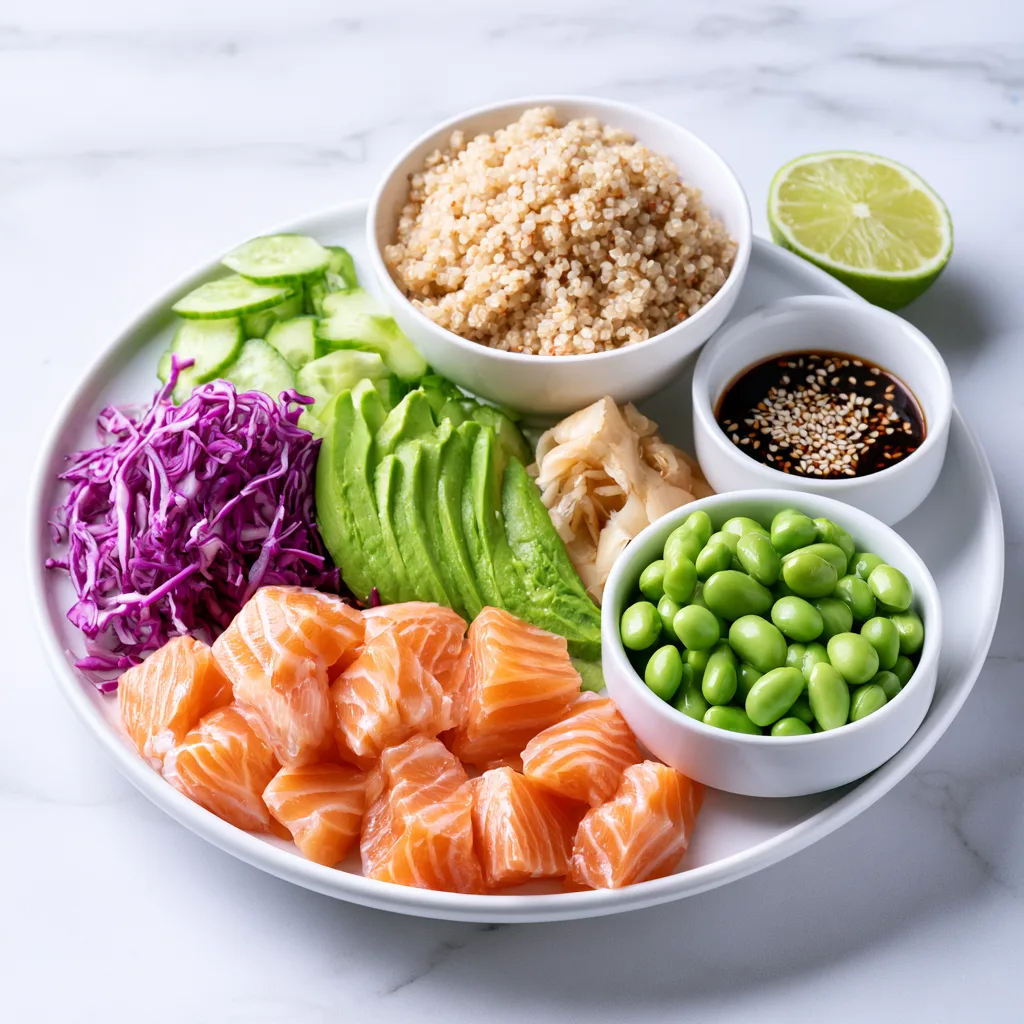
How to Make a Healthy Poke Bowl Step by Step
1. Prepare the quinoa base.
If your quinoa isn’t already cooked, prepare it according to the package directions and allow it to cool slightly. You will need approximately 2 cups cooked quinoa for four bowls.
For a refreshing poke bowl, the quinoa should be warm, room temperature, or chilled rather than piping hot, especially when serving it with raw fish.
2. Prepare the vegetables.
While the quinoa cools, wash and prepare your toppings. Dice the avocado into bite-sized pieces, julienne or dice the cucumber, finely shred the cabbage, slice the green onions, and prepare the edamame.
Keeping the toppings in separate piles makes it easier to create those beautiful sections of contrasting color associated with poke bowls.
3. Make the sesame-soy dressing.
In a small bowl, whisk together 3 tablespoons low-sodium soy sauce, 1 tablespoon rice vinegar, 1 teaspoon toasted sesame oil, 1 tablespoon lime juice, and the optional honey or maple syrup.
For a spicy variation, whisk in 1–2 teaspoons of sriracha. Taste and adjust the dressing before adding it to the bowl.
4. Prepare the protein.
Cut your chosen tuna or salmon into bite-sized cubes using a clean, sharp knife. If serving the seafood raw, use fish intended for raw consumption from a reputable source, keep it refrigerated, prevent cross-contamination, and prepare it shortly before serving.
For a cooked variation, cook the fish thoroughly using your preferred method before cutting it into pieces. Cooked shrimp, chicken, tofu, and tempeh also work beautifully.
5. Dress the fish.
If using raw fish, toss it with a small amount of the prepared dressing immediately before assembling and serving rather than relying on the acidic dressing as a food-safety treatment. Citrus juice and vinegar can change the texture of raw seafood, but they do not reliably make unsafe raw fish safe to eat.
If using cooked protein or tofu, you can let it sit in the dressing for several minutes to absorb more flavor.
6. Build the poke bowls.
Divide the quinoa evenly among four bowls. Arrange the fish or other protein over the quinoa, then create colorful sections of avocado, cucumber, cabbage, and edamame around it.
Add pickled ginger and sliced green onions.
7. Add the finishing touches.
Drizzle each bowl with additional sesame-soy dressing. Sprinkle toasted sesame seeds and thin strips of nori over the top. Add cilantro or an extra drizzle of sriracha if desired.
Serve immediately while the vegetables are crisp, the avocado is creamy, and all those beautiful colors remain fresh and vibrant.
Healthy Poke Bowl
This Healthy Poke Bowl combines salmon or tuna, fluffy quinoa, creamy avocado, crisp vegetables, edamame, and a savory sesame-soy dressing for a colorful meal that’s ready in just 20 minutes.
Ingredients
- 1 pound tuna or salmon, cubed
- 2 cups cooked quinoa
- 2 ripe avocados, diced
- 1 large cucumber, diced or julienned
- 1 cup finely shredded red cabbage
- 1 cup cooked shelled edamame
- 2 tablespoons pickled ginger
- 3 green onions, thinly sliced
- 2 teaspoons sesame seeds
- 3 tablespoons low-sodium soy sauce
- 1 tablespoon rice vinegar
- 1 teaspoon toasted sesame oil
- 1 tablespoon fresh lime juice
- 1 teaspoon honey or maple syrup, optional
- 1–2 teaspoons sriracha, optional
- 1 sheet nori, sliced, optional
- 2 tablespoons cilantro, optional
Instructions
- Prepare the quinoa and let it cool slightly.
- Dice the avocado and cucumber. Shred the cabbage, slice the green onions, and prepare the edamame.
- Whisk the soy sauce, rice vinegar, sesame oil, lime juice, and optional sweetener together. Add sriracha if desired.
- Cut your salmon or tuna into bite-sized cubes. Keep raw seafood properly chilled until you’re ready to serve it.
- Toss the protein lightly with some of the prepared sesame-soy dressing.
- Divide quinoa among four bowls. Arrange the protein, avocado, cucumber, cabbage, edamame, ginger, and green onions over the quinoa.
- Drizzle with dressing and finish with sesame seeds, nori, cilantro, and optional sriracha. Serve immediately.
Nutrition
Approximately 450–520 calories per serving. Nutrition varies depending on your protein, quinoa, avocado, dressing, and toppings.
Healthy Poke Bowl Serving Suggestions
A Healthy Poke Bowl with salmon or tuna needs very little alongside it because the grain, protein, vegetables, and toppings already create a complete and satisfying meal. For a beautiful family-style presentation, arrange all the components in separate bowls and create a build-your-own poke bar. Place quinoa, brown rice, greens, or cauliflower rice in one section; protein choices in another; then surround everything with bowls of cucumber, avocado, cabbage, edamame, green onions, sesame seeds, pickled ginger, and nori. Finish the table with sesame-soy dressing, sriracha, and lime wedges. Everyone can build a personalized bowl, making this an especially fun option for casual gatherings and family dinners. For individual presentation, use wide, shallow bowls so each colorful ingredient remains visible rather than being piled on top of another.
You can also transform these bowls depending on the season or occasion. Add mango or pineapple for a bright tropical version, shredded carrots for extra crunch and color, or sliced radishes for a peppery bite. A light cucumber salad or a bowl of miso soup works nicely alongside the poke bowl without making dinner feel too heavy. For a more substantial meal, substitute brown rice or sushi rice for quinoa, or add roasted sweet potato. A sprinkle of furikake, extra sesame seeds, nori strips, or green onions can provide an attractive final flourish. Whether served as a quick weekday lunch or arranged as a colorful dinner spread, the goal is contrast: creamy avocado beside crisp vegetables, savory dressing against fresh citrus, and tender protein over a satisfying base.
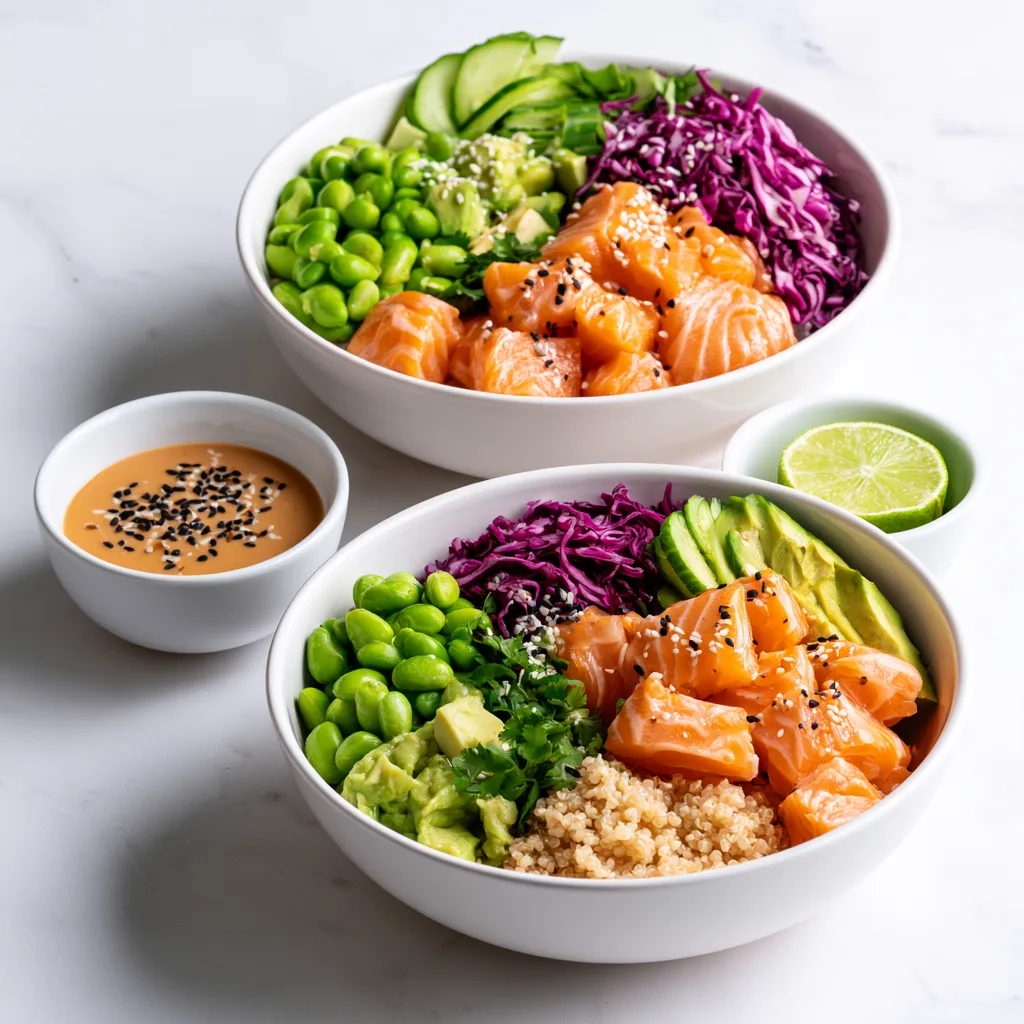
Healthy Poke Bowl Storage and Meal Prep
A healthy homemade poke bowl can be meal-prep friendly, but the components are best stored separately rather than assembling complete bowls several days ahead. Cooked quinoa can be refrigerated in a covered container and used within about 3–4 days. Prepare sturdy vegetables such as cabbage and carrots in advance and refrigerate them separately. Keep cooked edamame chilled as well. More delicate ingredients, particularly avocado, are best cut shortly before eating because their texture and appearance deteriorate during storage. You can prepare the sesame-soy dressing in advance and refrigerate it in a sealed jar, then shake or whisk it before serving. Keeping wet and dry components apart prevents the vegetables and grain from becoming soggy.
Raw seafood deserves extra care and shouldn’t be treated like ordinary multi-day meal-prep ingredients. Purchase it from a trusted source, follow the supplier’s handling and storage advice, maintain safe refrigeration, and use it promptly. For several days of prepared lunches, a thoroughly cooked protein such as cooked salmon, chicken, shrimp, or tofu may be a more practical option. Do not freeze a fully assembled poke bowl because cucumber, avocado, cabbage, and other fresh toppings can lose their appealing texture after thawing. Instead, freeze suitable components separately if needed and assemble the bowl with freshly prepared vegetables. On serving day, revive meal-prepped bowls with fresh avocado, lime juice, sesame seeds, green onions, nori, and a generous drizzle of dressing. Those last-minute additions bring back the fresh flavor and colorful appearance that make poke bowls so irresistible.
Conclusion
This Healthy Poke Bowl recipe brings together everything that makes a fresh homemade meal exciting: vibrant colors, contrasting textures, satisfying protein, creamy avocado, crunchy vegetables, and a savory sesame-soy dressing tying every bite together. Despite its impressive appearance, the recipe requires very little complicated cooking and can come together in approximately 20 minutes when the base is prepared ahead. It’s a beautiful reminder that an everyday lunch or dinner can feel colorful and special without requiring hours in the kitchen.
More importantly, make your poke bowl your own. Try salmon one week and cooked shrimp or tofu the next. Swap quinoa for brown rice, add mango for sweetness, pile on extra cucumber for crunch, or turn up the sriracha when you’re craving heat. Arrange all your favorite ingredients, drizzle over that fragrant sesame dressing, and enjoy every colorful bite. If you try this Healthy Poke Bowl, share your favorite protein, toppings, and creative combinations in the comments—there’s always room for another delicious variation.