
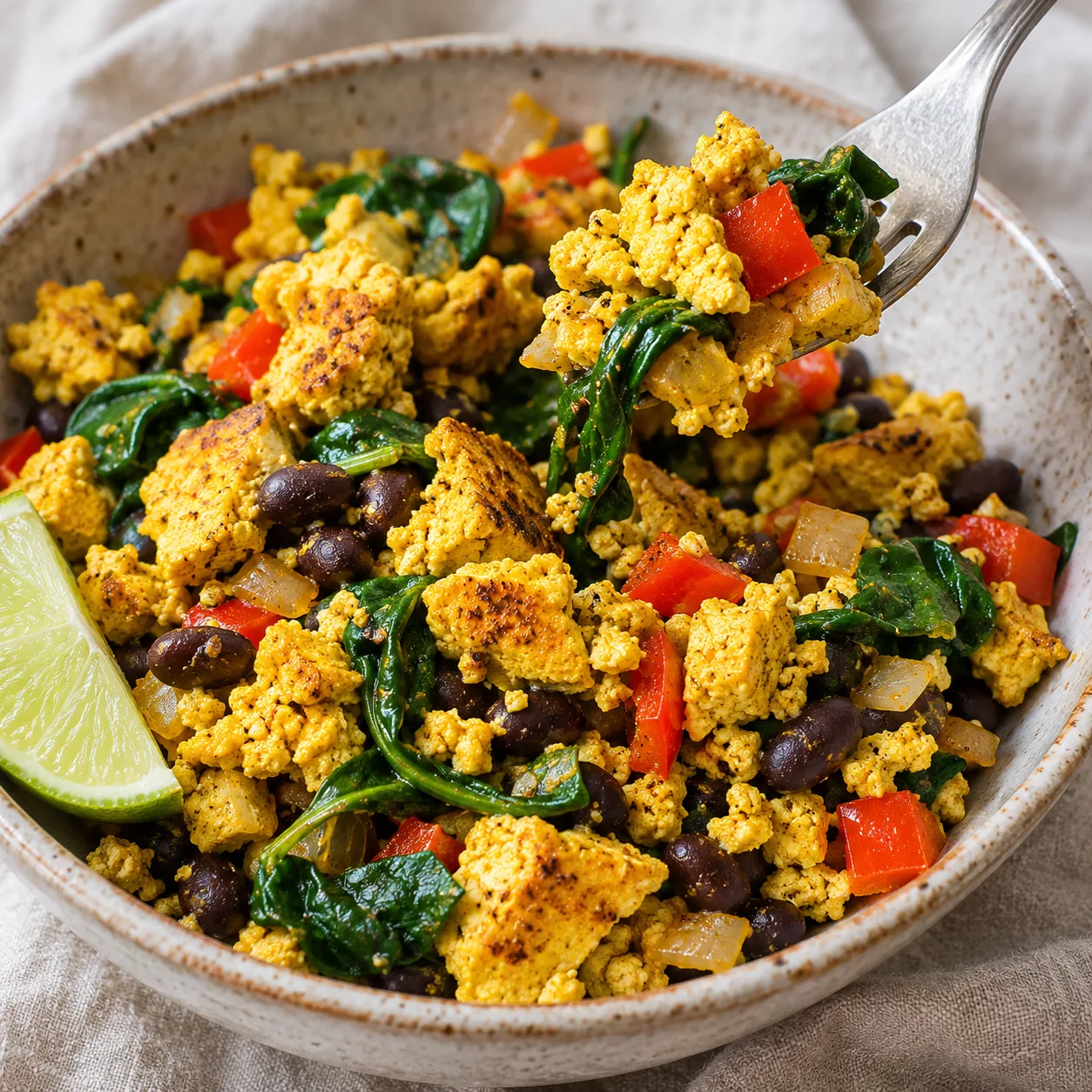
A tofu scramble breakfast bowl gives you a warm, savory breakfast without eggs or dairy. Crumbled tofu cooks with peppers, black beans and spinach, then finishes with lime and optional salsa. The method uses one skillet and takes about twenty-five minutes, making it useful for a relaxed morning or a short preparation session ahead of the week.
The most important choice is the tofu. A watery block and a dense vacuum-packed block behave differently in the skillet and can contain very different amounts of protein. This recipe explains how to manage both the moisture and the nutrition calculation rather than attaching a fixed protein claim to every kind of tofu.
Jump to the recipe or read the vegan breakfast FAQ. For more morning options, browse our high-protein, high-fiber breakfast guide.

What makes a tofu scramble bowl different?
Tofu does not turn into eggs. It offers its own mild flavor and crumbly texture, which can carry spices, vegetables and a bright finishing sauce. Turmeric adds a yellow color, while cumin and paprika supply savory warmth. You do not need to imitate every feature of scrambled eggs for the bowl to work.
Black beans add a second substantial ingredient and help make the bowl feel like a complete meal. Spinach cooks quickly at the end, so it does not need a separate saucepan. Salsa, avocado or toast can be offered alongside, but they are optional additions rather than hidden parts of the base recipe.
Choose firm, extra-firm or super-firm tofu
Firm and extra-firm refrigerated tofu are good starting points. Drain the package, pat the block dry and inspect how much water it releases. A short press between clean towels can help a wet block, but it adds time beyond the shortest preparation estimate.
Vacuum-packed super-firm tofu is generally denser and may not need pressing. Nasoya’s super-firm product, for example, instructs users to pat it dry without pressing. Follow the instructions for the product you actually bought rather than applying a twenty-minute press to every tofu style.
Silken tofu produces a much softer mixture and is not a direct substitution for the crumbled skillet method. It can be used in other breakfast preparations, but it may break down rather than form the bite-sized pieces intended here. Freezing tofu also changes its structure, so use an unfrozen block for the first batch.
Tofu Scramble Breakfast Bowl Recipe
Yield: 2 breakfast bowls. Prep: about 10 minutes. Cook: about 15 minutes. Total: approximately 25 minutes, plus any extra pressing time. Equipment: large skillet, spatula, board and knife.
Ingredients
- 14 ounces (400 g) firm or extra-firm tofu, drained and patted dry
- 2 teaspoons olive oil
- ½ medium yellow onion, finely diced
- 1 medium bell pepper, diced
- 1 garlic clove, minced
- ½ teaspoon ground cumin
- ½ teaspoon smoked or sweet paprika
- ¼ teaspoon ground turmeric
- ¼ teaspoon fine salt, plus more to taste
- ¼ teaspoon black pepper
- 1 cup (about 170 g) canned black beans, drained and rinsed
- 2 packed cups (about 60 g) baby spinach
- 1–2 tablespoons water, only if needed
- 2 teaspoons lime juice
- Optional: chopped cilantro, salsa and avocado
Instructions
- Prepare the tofu. Crumble the drained block into irregular bite-sized pieces. Leave some larger pieces rather than crushing everything into tiny crumbs. If the tofu is very wet, press briefly and allow extra preparation time.
- Cook the vegetables. Heat oil in a large skillet over medium heat. Add onion and bell pepper. Cook for about 5 minutes, stirring, until beginning to soften. Add garlic and cook for 30 seconds.
- Cook the tofu. Add crumbled tofu, cumin, paprika, turmeric, salt and pepper. Spread across the pan and cook for 5–7 minutes, stirring occasionally. Let excess moisture evaporate before adding extra water.
- Add beans and greens. Stir in black beans and spinach. Cook for 2–3 minutes, until the beans are hot and spinach has wilted. If the mixture sticks because it is genuinely dry, add water a tablespoon at a time.
- Finish. Stir in lime juice, taste and adjust seasoning. Divide between two bowls. Add optional toppings separately and serve while hot.
Timing note: Wet tofu, a small pan or large vegetable pieces can extend cooking. The goal is a moist scramble without a pool of liquid, not a completely dried-out mixture.
Manage moisture before adding more ingredients
A large skillet gives water somewhere to evaporate. When tofu is piled into a small saucepan, the pieces steam together and may stay wet. Spread the mixture out and allow a little time between stirs so the pan can do its work.
Adding beans and spinach too early introduces more moisture before the tofu has had a chance to dry slightly. Follow the sequence: vegetables first, tofu next, beans and greens last. This keeps the steps understandable and makes it easier to spot which ingredient changed the texture.
Do not add the optional water automatically. It is there for a dry pan, not as a required sauce ingredient. If the scramble already looks wet, continue cooking uncovered and stir gently. More liquid will not fix a mixture whose main problem is excess water.
Seasoning without an overpowering turmeric taste
Turmeric is used in a small amount for color and background flavor. A large spoonful can taste earthy and bitter. Cumin and paprika do more of the savory flavor work here, while lime brightens the finished bowl. Measure the first batch before deciding you need a stronger spice level.
For a more egg-like aroma, some cooks use a little kala namak, or black salt. It is optional and not included in the base recipe. If you try it, reduce the ordinary salt and add a small amount near the end rather than treating it as a free extra seasoning.
Nutritional yeast is another optional addition, but it changes the flavor and nutrition. Fortification varies, so do not assume every product supplies the same vitamins. The recipe works without it; add it only if you like its flavor and have checked the label.
How to estimate protein per breakfast bowl
Begin with the tofu label and the amount used. For an illustrative product providing 12 grams of protein per 100 grams, a 400-gram block supplies 48 grams. Divided between two bowls, that is 24 grams per bowl before adding the beans or vegetables.
If your half-cup serving of drained beans supplies about 6 grams, the example bowl reaches roughly 30 grams from tofu and beans together. A different tofu can put the result above or below that amount. This example explains the arithmetic; it is not a universal panel for the recipe.
| Calculation step | Example |
|---|---|
| Tofu protein per 100 g | 12 g, if stated on your product |
| Protein in 400 g tofu | 48 g |
| Tofu contribution per bowl | 24 g |
| Beans per bowl | About 6 g, depending on label |
| Example subtotal | About 30 g before vegetables |
To use a label with another serving weight, divide protein grams by the listed food weight, multiply by the tofu weight you use, then divide by two. Include optional bread or toppings separately. Do not count the full block’s protein in each bowl when the recipe clearly serves two.
Vegetable and bean swaps
Mushrooms can replace part of the pepper, but cook them until their released liquid evaporates before adding tofu. Zucchini also adds moisture and softens faster. Keep the first batch close to the listed formula, then vary one vegetable once you understand how the pan behaves.
Kale needs more time than baby spinach. Remove tough stems, chop the leaves finely and add earlier if necessary. Frozen spinach should be thawed and squeezed so it does not flood the skillet. These are useful substitutions, but they are not all timing-identical.
Pinto beans or chickpeas can replace black beans by measured drained amount. They change texture and contribute different nutrition. Rinse canned beans and let them drain well. If using beans cooked from dry, use fully cooked beans rather than expecting a few skillet minutes to cook them.
Serving options for different appetites
The base bowl includes tofu, beans and vegetables. Add toast, a tortilla or cooked grain if that suits your appetite. Those sides increase the meal’s carbohydrate content and total size. Avocado adds richness and salsa adds brightness, but neither is required for the scramble to taste complete.
For a bowl with grains, use a measured amount already cooked and stored safely. Our quinoa fried rice explores another savory grain preparation, while the mango quinoa bowl offers a different breakfast flavor direction.
Meal prep and reheating
Divide the cooked scramble into shallow covered containers and refrigerate promptly. Keep salsa, avocado and other cold toppings separate. Use refrigerated portions within three to four days at 40°F (4°C) or below, respecting shorter limits on any added ingredients.
Refrigerate perishable food within two hours, or one hour above 90°F (32°C), following USDA guidance. Reheat a portion on the stove or in the microwave until it reaches 165°F (74°C). Stir during reheating so cold pockets do not remain in the middle of a dense serving.
A splash of water can help a refrigerated portion loosen, but use a small amount. The tofu will be a little firmer after storage and the spinach softer. For the freshest texture, make the scramble ahead and add newly chopped toppings after the hot portion is ready.
Can you turn it into breakfast burritos?
Yes, if you want a separate variation. Let excess cooking liquid evaporate before wrapping so the tortilla does not become soggy. Use tortillas large enough for the filling and avoid overstuffing. Cool and refrigerate the filling promptly rather than leaving a pan out until it reaches room temperature.
For freezer preparation, wrap individual cooled portions securely and label them. Reheating time depends on size and appliance, so check the center temperature rather than relying on a fixed number of seconds. Freezing changes tofu’s texture; try one burrito first before committing a large batch.
Allergens and dietary labels
Tofu contains soy. This recipe is written without eggs or dairy, but that does not make it suitable for a soy allergy. Check packaged salsa, tortillas, seasoning blends and any additional toppings for ingredients relevant to your household.
The base can be made without gluten-containing ingredients, but verify the products and cross-contact requirements if gluten avoidance is medically necessary. Vegan does not mean carbohydrate-free or low calorie. Beans, oil, portions and optional sides all influence the complete meal.
Frequently Asked Questions
How can I make a vegan 30g protein breakfast?
Choose a tofu with a useful protein amount on its label and pair a measured portion with beans. The example calculation here reaches about thirty grams when tofu provides 12 grams per 100 grams. Check your actual products, because firm and super-firm varieties can differ substantially.
What are the easiest high protein breakfast foods?
Convenient options include tofu, Greek yogurt, cottage cheese, eggs and prepared beans, depending on your diet. Choose a main protein ingredient first, then add produce and a suitable starch. This bowl uses tofu and canned beans so you do not need protein powder or an egg-based recipe.
Is tofu scramble a high protein breakfast without eggs?
It can be, when the tofu portion supplies enough protein for your meal. The absence of eggs does not establish the amount by itself. Use the label and divide the full recipe correctly; vegetables and colorful toppings cannot substitute for calculating the main protein ingredient.
Can I meal prep high protein breakfast burritos?
Yes. Use a filling that is not overly wet, wrap manageable portions and refrigerate or freeze them promptly. Keep cold toppings separate where practical. Reheat until the center reaches 165°F, checking with a thermometer, and remember that the tortilla changes the nutrition from the bowl recipe.
Is this breakfast good for blood sugar balance?
No single breakfast guarantees a particular glucose response. This bowl contains protein, vegetables and carbohydrate-containing beans, with optional sides adding more. If you manage diabetes or need a specific carbohydrate amount, calculate your portion and follow your care plan rather than relying on a recipe title.
Do I need to press the tofu?
It depends on the product. Wet firm tofu may benefit from a short press, while some vacuum-packed super-firm products instruct you only to pat them dry. Follow the package, then use the skillet to evaporate excess moisture. Pressing time is extra preparation, not hidden inside a five-minute promise.
What is the best breakfast for muscle gain?
There is no single best breakfast. Overall nutrition, appropriate training and consistency matter more than one recipe name. A tofu-and-bean bowl can contribute a measured protein serving within your day. Choose portions and sides that fit your needs rather than assuming more toppings automatically improve the result.
Sources and nutrition notes
Nasoya: super-firm tofu preparation and ingredients; USDA: storing leftovers; USDA: reheating methods. Protein examples require recalculation with your own products.