
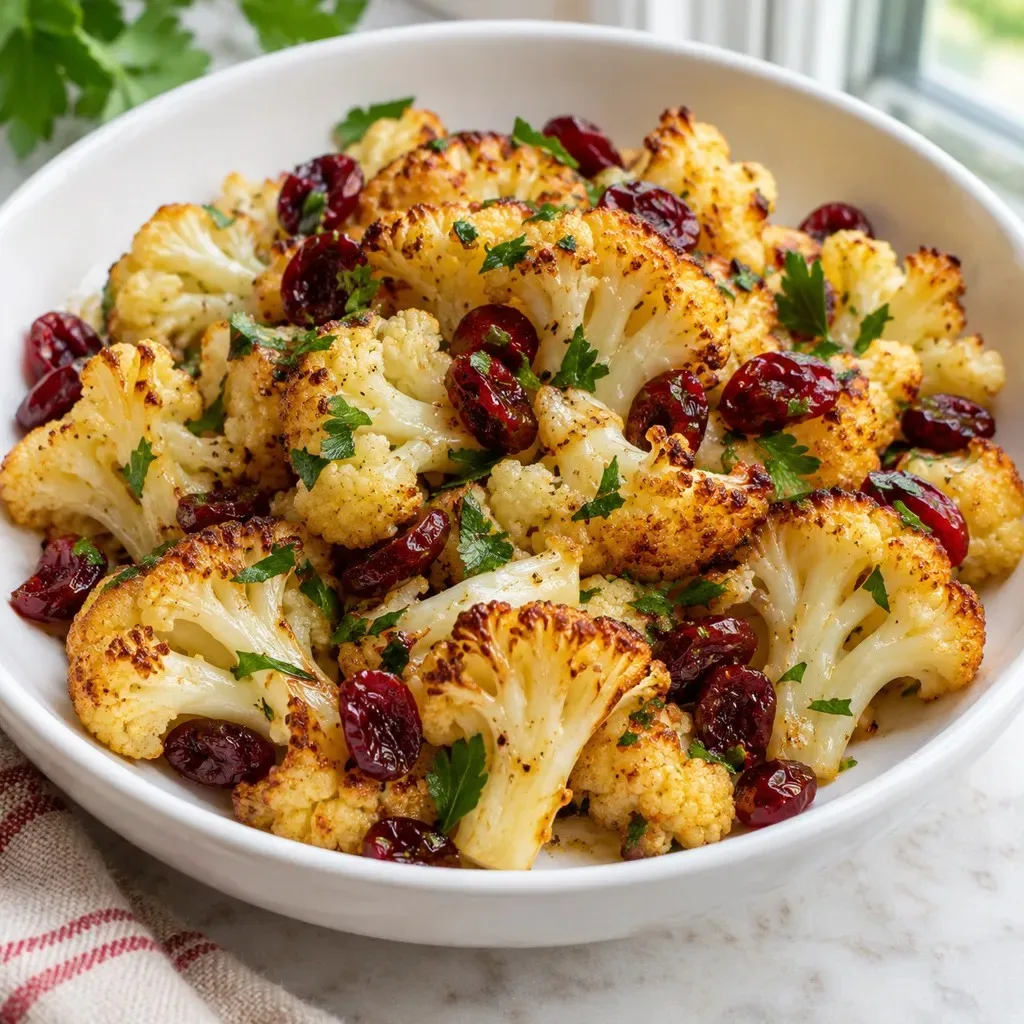
Roasted cauliflower with cranberries and parsley is a Thanksgiving vegetable side that balances browned florets with a bright lemon Dijon dressing. Dried cranberries add small sweet-tart bites, while parsley keeps the finish fresh. The cauliflower roasts without the fruit or dressing, so it has a chance to develop color before the final toss.
This recipe serves six alongside a main dish and other sides. Allow about fifteen minutes of preparation and twenty-five to thirty minutes of roasting. It is an original proposed recipe, not a kitchen-tested formula. Cauliflower size, cutting style, and oven airflow affect the cooking, so look for tender stems and browned edges rather than relying only on the timer.
The dish is designed to offer contrast on a rich holiday plate. It contains no cream sauce or cheese, and its modest dressing should coat the florets without collecting in a deep pool. Serve it warm for the strongest roasted character, with a fresh scatter of parsley added close to serving.
Why cauliflower deserves a place beside the turkey
Thanksgiving menus often include several soft, rich dishes. Cauliflower can provide a different texture when the flat surfaces brown against a hot pan and the centers remain tender. Cranberries connect the side with familiar holiday flavors without making it another bowl of cranberry sauce.
The lemon Dijon dressing is useful because it can be whisked in advance. Once the cauliflower is cooked, the final assembly is quick. This helps if you need a vegetable that finishes while the main dish is being portioned, provided you have reserved the necessary high-heat oven interval.
The base recipe also avoids nuts and dairy. That does not remove the need to check mustard and other labels for individual dietary needs, but it keeps the ingredient list relatively simple. Offer any optional toppings separately rather than adding cheese or nuts automatically to a dish guests may have chosen for its original ingredients.
Choose a cauliflower and cut it for browning
Select a firm head with compact florets and no large soft patches. A head weighing about two pounds gives a practical starting amount, although the usable yield changes with the stem and leaves. Remove damaged areas, then cut into florets around one and a half inches across.
Aim for similar stem thickness as well as similar-looking tops. A large dense stem attached to a small floret can remain firm after the delicate edges have browned. Split thick stems lengthwise to create flat surfaces. Those surfaces make useful contact with the pan and give more opportunity for color than perfectly rounded pieces.
Wash the florets and dry them thoroughly. Water caught in the branches is easy to overlook. Shake off excess, drain, and pat dry as needed before adding oil. Wet cauliflower on a crowded tray tends toward steaming, which is a different result from the browned edges this recipe seeks.
Season simply before roasting
Toss the dry cauliflower with two tablespoons of olive oil, salt, black pepper, and ground cumin. The cumin provides warmth without making the dish strongly spiced. Distribute the seasoning in a large bowl instead of sprinkling it only over the top of the tray, where some pieces may receive most of it.
Use the measured oil as a light coating, not a bath. If the cauliflower is unusually large, adjust the batch and pan space thoughtfully rather than adding large splashes until the bottom of the bowl is oily. Excess oil can make the finished dressing feel heavy and leave the florets slick.
Do not add the cranberries or lemon dressing at this stage. Dried fruit can scorch at high heat, and dressing introduces moisture before the surface has browned. Keeping roasting and finishing separate is the main technique that makes this vegetable side easy to adjust.

Use enough sheet-pan space
Heat the oven to 425°F, or 220°C. Spread the cauliflower on a large rimmed metal sheet pan in one layer. Place some flat cut faces against the pan and leave room between clusters. If everything touches closely or overlaps, use a second tray rather than pushing the pieces into a deep pile.
Roast for approximately twenty-five to thirty minutes, turning once. Check earlier if the florets are small or the pan is dark. The edges should be browned in places, and a thin knife should enter the stems easily. A little variation in color is normal; you do not need every branch to look identical.
If using two oven racks, rotate the trays according to how your oven heats. Avoid repeatedly opening the door to inspect every minute, which can slow cooking. Choose a sensible early check, turn the vegetables, then let them finish. Record the actual time that suits your pan and cutting style for the next batch.
Soften the cranberries without soaking the cauliflower
Place the dried cranberries in warm water for about five minutes, then drain thoroughly. This brief soak can make firm dried fruit more pleasant to eat. It is not a step for adding sweet soaking water to the finished dish. Press away any excess moisture before tossing the berries with the roasted vegetable.
Dried cranberries are often sweetened, and brands vary in softness and sweetness. Taste one before deciding whether the dish needs any additional sweet element. The proposed recipe does not include extra sugar because the fruit already contributes sweetness. Keeping the dressing sharp helps balance that contrast.
Fresh cranberries are not a direct replacement for dried cranberries in this final toss. They have a different texture and a much sharper flavor. If fresh fruit is what you have, prepare it separately in a suitable cooked topping and treat the result as a different variation rather than scattering raw berries over the hot cauliflower.
Whisk the lemon Dijon dressing
Combine fresh lemon juice, the separate tablespoon of olive oil, and Dijon mustard. Whisk until the mixture looks reasonably blended. The dressing does not need to remain perfectly emulsified for hours; whisk again before using if it separates. A small jar with a tight lid is convenient for advance preparation and transport.
Taste the dressing with a piece of cauliflower rather than judging it only by a spoonful of liquid. On its own it will seem sharper than the finished bite. The roasted vegetable and sweet dried fruit change the balance. Make small adjustments after combining instead of turning the dressing into a large sweet sauce in advance.
Add the dressing to the warm cauliflower and cranberries, toss gently, and fold in parsley just before serving. Warm florets take on the flavor, while the late parsley stays fresher-looking. If preparing ahead, keep all these components separate until the vegetable has been reheated.
Make-ahead preparation for Thanksgiving
The day before, cut the cauliflower, prepare the dressing, and chop or wash the parsley as appropriate. Refrigerate the perishable components in covered containers and dry the florets again before roasting. This removes much of the knife work while preserving the fresh roasting stage for serving day.
If you need to roast ahead, cool the cauliflower promptly in shallow containers and refrigerate. Reheat it spread out on a tray until leftovers reach 165°F, then add the separately stored fruit, dressing, and parsley. Expect a slightly softer texture than a fresh roast, even if the reheated edges regain some color.
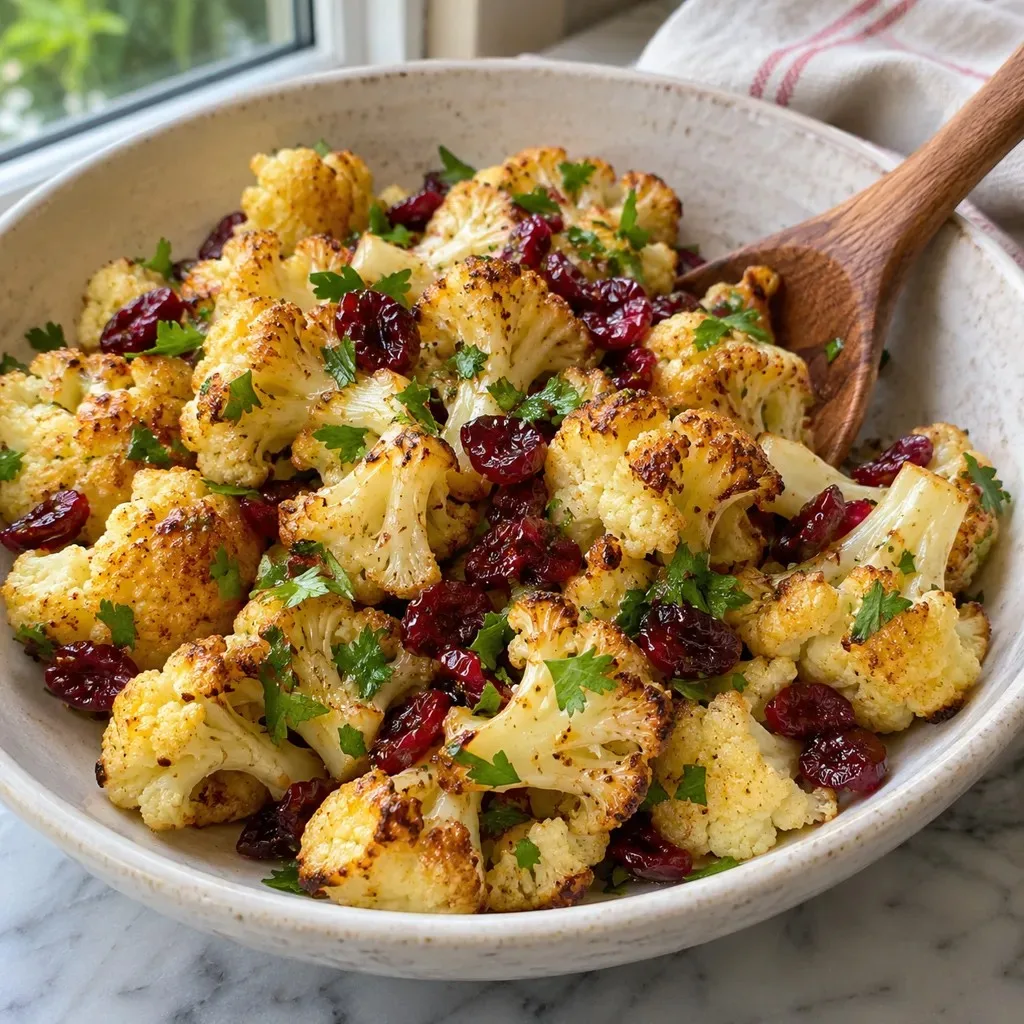
Avoid storing the finished dish in a deep bowl with a tight lid while it is still giving off steam. It traps moisture and softens the exterior. For a long delay, prioritize safe cooling and refrigeration over preserving every crisp edge. The dressing can refresh the flavor after safe reheating.
Coordinate the oven with other sides
Cauliflower needs a relatively hot oven for this method. A turkey, pie, or custard baking at a lower temperature does not create an interchangeable schedule. Choose a separate roasting interval or select another vegetable technique if the oven cannot accommodate it. An attractive side should not compromise the main dish's safe cooking plan.
For a larger gathering, use two similar trays rather than one very crowded tray. Double the ingredients if appropriate, but do not automatically double roasting time. Airflow, pan position, and the amount of cold food introduced all matter. Check tenderness on each tray because one may finish before the other.
If carrying the side to another home, transport the components cold with suitable ice packs and reheat at the destination when possible. Carry dressing in a leakproof container and parsley separately. This keeps the final texture more controlled than tossing everything hours before the meal.
Variations and substitutions
Golden raisins can replace dried cranberries for a different sweet note, but the dish will lose its cranberry tartness and red color. Keep the amount modest and taste the final balance. A different dried fruit is a flavor variation, not a reason to add a large extra quantity of sugar to the dressing.
Parsley can be replaced partly with another tender herb you enjoy, but strong herbs such as rosemary should be used much more sparingly. Finely chop any tougher leaves. The herb should finish the roasted vegetable, not create a mouthful of raw woody stems.
Frozen cauliflower can be roasted as a variation, following package handling instructions and allowing for extra moisture. Do not promise identical browning or texture to dry fresh florets. Spread it generously and assess its progress. If it becomes tender before deeply browned, serve a pleasant vegetable rather than overcooking it in pursuit of a photograph.
Troubleshooting flavor and texture
Pale cauliflower may need more space, drier surfaces, or more time in a fully heated oven. Soft, wet florets usually point to steaming, especially if the tray was crowded or covered. If the tips are dark but the stems are firm, cut thick stems more evenly on the next batch and finish the current tray carefully at a slightly lower heat if necessary.
A dressing that tastes too sour may need to be distributed more evenly across the cauliflower rather than immediately sweetened. Taste a bite that includes fruit. If the dish seems oily, check whether extra roasting oil and extra dressing were added without measuring. The two oil quantities serve different stages and should not become unlimited additions.
If the parsley looks wilted and dark, it was probably added too early or reheated repeatedly. Reserve it for the final toss. If the cranberries are chewy, a brief soak and thorough drain can help. Cooking them on the roasting tray for the full interval is more likely to harden or scorch them than improve them.
Serving and leftover safety
Serve with turkey, mashed potatoes, and a savory stuffing, or pair with lentils and a simple grain dish for a meatless meal. The lemon dressing makes it a useful contrast to creamier foods. Leftovers can be reheated and added to a lunch bowl, with fresh herbs added afterward.
Refrigerate within two hours, or one hour above 90°F, in shallow containers. Keep at 40°F or below and use within three to four days. Reheat leftovers to 165°F. If you prefer a cool or room-temperature presentation, use a properly chilled portion and limit its time out; room-temperature serving is not permission for an all-day buffet hold.
Frequently asked questions
Can I roast cauliflower ahead of Thanksgiving?
Yes. Cool it promptly, refrigerate, and reheat to 165°F before finishing with the separate cranberries, dressing, and parsley. It will usually be softer than freshly roasted cauliflower. The best advance tasks for fresh texture are cutting the vegetable and preparing the dressing.
How do I keep roasted cauliflower from getting soggy?
Dry it thoroughly, use enough pan space, and roast uncovered in a fully heated oven. Keep fruit and dressing out until the roasting stage is complete. A deep pile of florets traps steam, and adding more time alone may simply produce softer cauliflower.
Should I use fresh or dried cranberries?
Use dried cranberries for this recipe's final toss. Soak briefly if they are firm, then drain well. Fresh cranberries are much tarter and have a different texture, so they need a separate preparation rather than an automatic cup-for-cup exchange.
Can I serve this dish at room temperature?
It can be served during a short meal interval, but do not leave it out indefinitely. Keep prepared food safely chilled or hot until serving and follow the two-hour limit, reduced to one hour above 90°F. For the freshest texture, finish the parsley and dressing near the time guests eat.
Roasted Cauliflower with Cranberries: Thanksgiving Side
By Amanda · Original proposed recipe
Ingredients
Instructions
- Heat oven to 425°F (220°C). Dry cauliflower and toss with 2 tablespoons oil, salt, pepper, and cumin.
- Arrange uncrowded on a large rimmed sheet pan. Roast 25–30 minutes, turning once, until browned and tender.
- Soak dried cranberries in warm water for 5 minutes, then drain well. Whisk lemon juice, 1 tablespoon oil, and Dijon.
- Toss hot cauliflower with cranberries and dressing, then fold in parsley just before serving.
Original proposed recipe; not kitchen-tested. All times are estimates. Scaling changes ingredients only; cooking time, temperature, pan space, and doneness still need attention.
Food safety references
FoodSafety.gov: safe cooking and reheating temperatures; FDA: egg safety.